
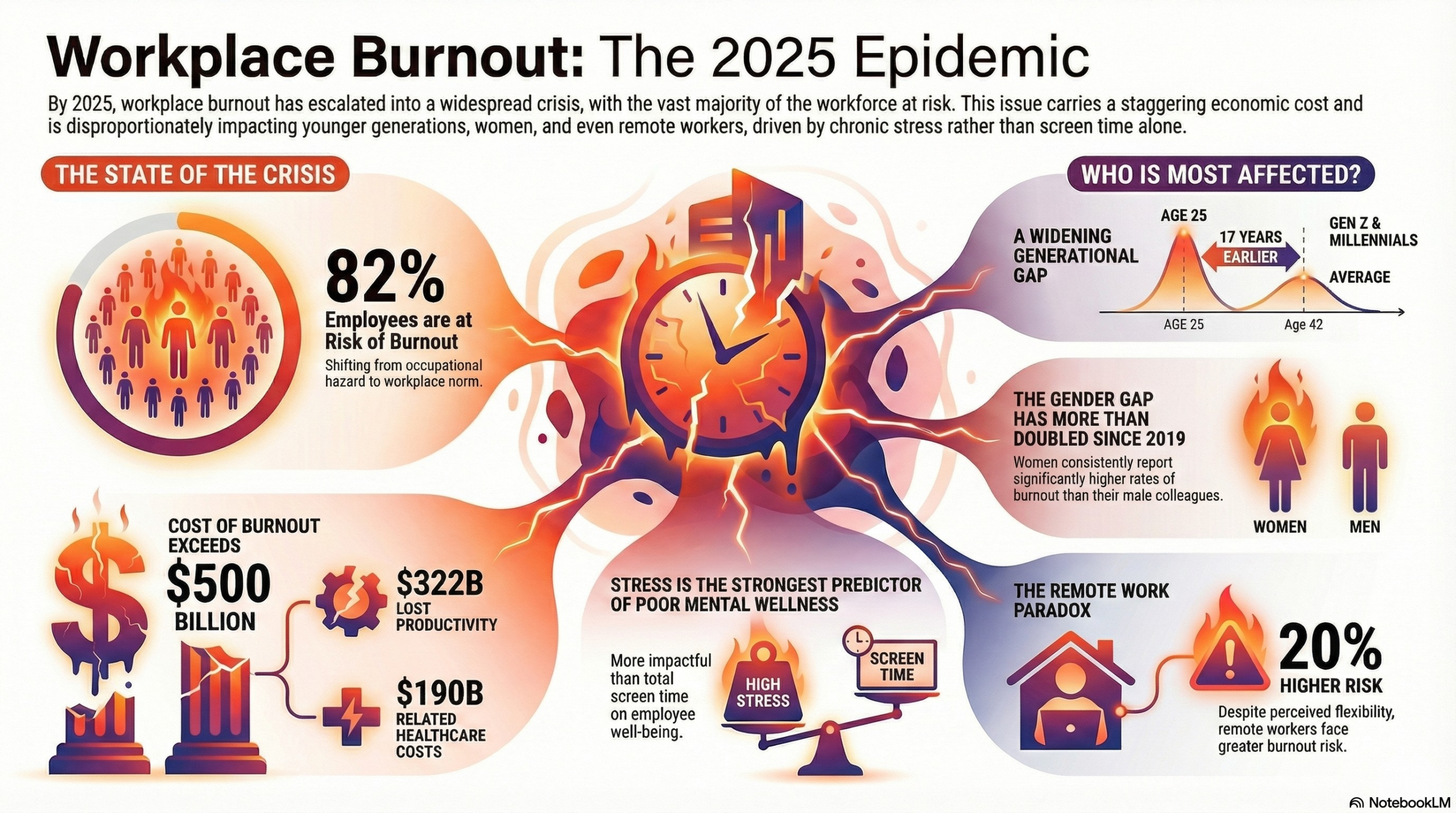
1. The Shifting Employee Landscape: A Paradox of Progress and Pressure
The post pandemic work environment continues to evolve, presenting a complex picture for organizational leaders. While key metrics measuring employee engagement show a significant and welcome recovery, a deeper analysis reveals a workforce grappling with heightened stress and pressure. This paradox of simultaneous progress and fragility indicates that surface level improvements may be masking systemic issues that require immediate and strategic attention. Understanding this duality is the first step toward building a genuinely resilient and motivated workforce for the future.
Overall employee sentiment has trended upward, recovering from several all-time lows over the last two years. This positive shift is a clear indicator that efforts to reconnect and re-engage employees are paying dividends.
- Positive Energy: 63% of employees report positive energy and excitement at work, a striking 12-point increase over the last two years.
- Sense of Belonging: 66% feel a genuine sense of belonging at their employer, marking a nine-point gain since 2023.
- Daily Inspiration: 64% say their organization inspires them to do their best work every day, an 11-point increase in two years.

However, even these gains are fragile. For instance, while 66% of employees report a sense of belonging, one in three still feels isolated and disconnected. This positive data is further shadowed by a counter narrative of increasing daily strain. The number of employees who dread starting their workday has climbed to 39%, a significant rise from just 23% in 2020. Furthermore, 43% of employees feel their employer expects too much of them, an 11-point increase over two years. This perception of intense pressure is particularly acute among Gen Z and Millennial workers.
The strategic implication of this paradox is clear: celebrating the recovery in top line engagement metrics without addressing the underlying causes of burnout is a high-risk approach. To prevent these fragile gains from collapsing under the weight of systemic burnout, leaders must conduct a necessary diagnostic of the modern employee experience.
2. Deconstructing the Modern Work Experience: Key Arenas of Impact
To resolve the central paradox of rising engagement and persistent burnout, leaders must analyze the complex realities of three core aspects of the modern work experience: the physical location of work, the state of employee wellbeing, and the rapid integration of artificial intelligence. Each of these arenas presents both opportunities and significant challenges that shape daily work life.
2.1. The Work Location Conundrum: No Easy Answers
The relationship between work location and employee satisfaction is far from straightforward. While remote workers are overwhelmingly the most satisfied with their arrangement (86%), the data reveals significant tradeoffs across different models, confirming that a one size fits all policy is unlikely to succeed.
- Remote Workers: This group reports the highest satisfaction with their work arrangement and has the lowest intent to leave, with 65% having no plans to seek a new employer. However, this autonomy comes at a cost, as they report lower wellbeing than their hybrid colleagues, coming in at least 10 points lower across all dimensions. The disparity is starkest in financial wellbeing, with a 13-point difference between hybrid (51%) and remote workers (38%) feeling good about their finances.
- Hybrid Workers: This cohort emerges with the highest overall wellbeing and is the most likely to speak positively about their employer. Yet, they also experience a unique friction between freedom and social interaction, which can lead to feelings of loneliness and isolation.
- Onsite Workers: Employees working fully onsite face the most significant challenges. They are the least likely to feel connected to their company’s mission and report being the least inspired to do their best work.
The key strategic insight is that each model carries distinct risks and rewards. This data signals that a mandatory return to office policy is not merely a logistical decision but a significant talent retention risk that must be modeled against potential productivity gains. The data shows that 33% of remote workers would consider leaving their jobs if such a policy were implemented.
2.2. Employee Wellbeing: An Uneven and Fragile Recovery
This fragile recovery in wellbeing is the root cause of the burnout paradox identified earlier, with financial strain being the primary accelerant. While 47% of employees now feel good about their overall wellbeing positive shift, particularly in mental and social health, this progress is unevenly distributed and requires targeted support. The most significant and persistent challenge remains financial health, which continues to be the biggest hurdle for employees across the board.
This recovery has not been uniform, with notable disparities across key demographics:
- Generational Divide: Younger generations, including Gen Z and Millennials, report higher overall wellbeing than their Gen X and Boomer colleagues.
- Work Arrangement: In line with other findings, hybrid workers feel better about their wellbeing than their fully remote or fully onsite counterparts.
- Management Level: A stark gap exists in financial wellbeing, with 60% of Senior Management and 48% of Middle Management reporting positive financial health, compared to just 27% of individual contributors.
The business case for a strategic investment in wellbeing is undeniable. A comparison of employees with high wellbeing versus those with low wellbeing reveals striking differences in engagement and loyalty. High-well-being employees are far more connected to their organization’s mission (81% vs. 44%), more likely to stay with their current employer (64% vs. 49%), and nearly 2.5 times more likely to recommend their employer to others (84% vs. 34%).
2.3. AI Integration: The Dual Edged Sword of Productivity and Apprehension
Artificial intelligence is rapidly moving from a theoretical concept to a daily reality in the workplace. Nearly one quarter of all employees now use AI tools every day, and 43% state that this technology makes them more productive. This adoption signals a significant shift in how work gets done.
However, this productivity boost is accompanied by tangible concerns. Approximately one third of all workers worry that AI will eventually take over their jobs, creating a layer of apprehension that employers must address. Despite this, employee comfort with AI is growing. The percentage of workers whose employer actively encourages the use of AI has increased from 35% to 41% in the past year, indicating that organizations are leaning into this technological transformation.
Navigating the complexities of work location, wellbeing, and AI integration requires a robust support system. The data clearly shows that the effectiveness of this support is the ultimate determinant of employee loyalty, productivity, and overall success.
3. The Support Imperative: Bridging the Gap Between Provision and Impact
In today’s competitive talent market, simply offering a list of benefits is no longer a differentiator. The strategic focus must shift from mere provision to driving adoption and providing meaningful guidance. This is the critical bridge that organizations must cross to unlock significant returns in employee loyalty, wellbeing, and productivity.
3.1. The Awareness Usage Disconnect
A significant gap exists between the availability of wellbeing programs and their actual use. While 85% of workers report having access to at least one employer sponsored wellbeing program such as mental health apps or stress management workshops, the average utilization rate for these programs hovers at only 30 35%. This disconnect represents a massive, missed opportunity. The value proposition for closing this gap is compelling: among the employees who do use these benefits, an overwhelming 85% find them valuable.
3.2. The Tangible ROI of the “Fully Supported” Employee
The business value of providing comprehensive, easy to use support is not theoretical; it is quantifiable and substantial. Employees who feel “fully supported” by their employer’s benefits ecosystem consistently outperform the general employee population across every major indicator of engagement and retention.
Key Differentiators of Fully Supported Employees:
- Loyalty: 67% plan to stay with their current employer for the next year (+10 points).
- Advocacy: 76% tell others great things about their organization (+14 points).
- Recommendation: 38% are extremely likely to recommend their employer to others (+17 points).
- Experience: 64% report having exceptional employee experience (+20 points).
- Wellbeing: 62% rate their overall wellbeing highly (+17 points).
The most compelling outcome of this comprehensive support is its direct impact on the bottom line. Fully supported workers are demonstrably more productive (83% vs. 70%).
3.3. The Communication Paradox: Overwhelmed but Underserved
Current HR communication strategies are creating significant tension. While 63% of employees feel well informed about their benefits, nearly half (46%) find the sheer volume of HR and benefits messages overwhelming. This suggests that employees are being saturated with information but may lack the clarity and guidance needed to act on it.
This finding underscores the critical importance of benefits literacy. Employees with a high degree of benefits knowledge or “benefits buffs” exhibit the highly valued behaviors that organizations strive to cultivate. These well-informed workers show 25% higher loyalty scores and are 40% more likely to view their benefits as an investment in their future. The contrast between employees with high and low benefits knowledge is stark:
| Metric | High Benefits Knowledge | Low Benefits Knowledge |
| Plan to Stay | 62% | 51% |
| Connected to Mission | 77% | 39% |
| Confident in Decisions | 80% | 43% |
These insights directly inform a new strategic playbook for employers, one focused not just on what is offered, but on how it is communicated, delivered, and supported.
4. Actionable Recommendations for HR and Executive Leadership
The findings from this study provide a clear strategic playbook for organizations aiming to build a more resilient, engaged, and productive workforce. The following recommendations are designed to directly address the core challenges of burnout, the benefits usage gap, and communication overload. By moving from a passive to an active support model, leaders can translate insight into meaningful action.
4.1. Recommendation: Segment and Personalize Communication
Move away from one size fits all messaging. Benefits communication should be segmented not only by traditional demographics like generation but also by dynamic factors such as an employee’s work location and their current level of benefits literacy. Create a multi-channel strategy that combines succinct, AI generated digital alerts for broad awareness with periodic high touch check ins for personalized guidance. This approach ensures that information is not only received but is also relevant and actionable, directly addressing the problem of communication overload.
4.2. Recommendation: Supercharge Wellbeing Adoption
Actively work to close the gap between program access and usage. A passive approach is no longer sufficient. To drive meaningful adoption of wellbeing resources, employers should deploy a combination of modern technology and human centric support.
- Pair mobile first platforms that offer convenience with human centered support, such as live coaching and concierge services that can guide employees to the right resources.
- Incentivize initial participation and sustained engagement with small, tangible rewards.
- Utilize social recognition and team-based challenges to build community and encourage participation.
While the 2025 outlook for employee engagement is positive, sustained success depends on a strategic evolution. The organizations that thrive will be those that recognize the competitive advantage of solving the engagement burnout paradox. They will build a superior support architecture that doesn’t just manage burnout but preempts it, fostering a workforce that is not only engaged but truly resilient.